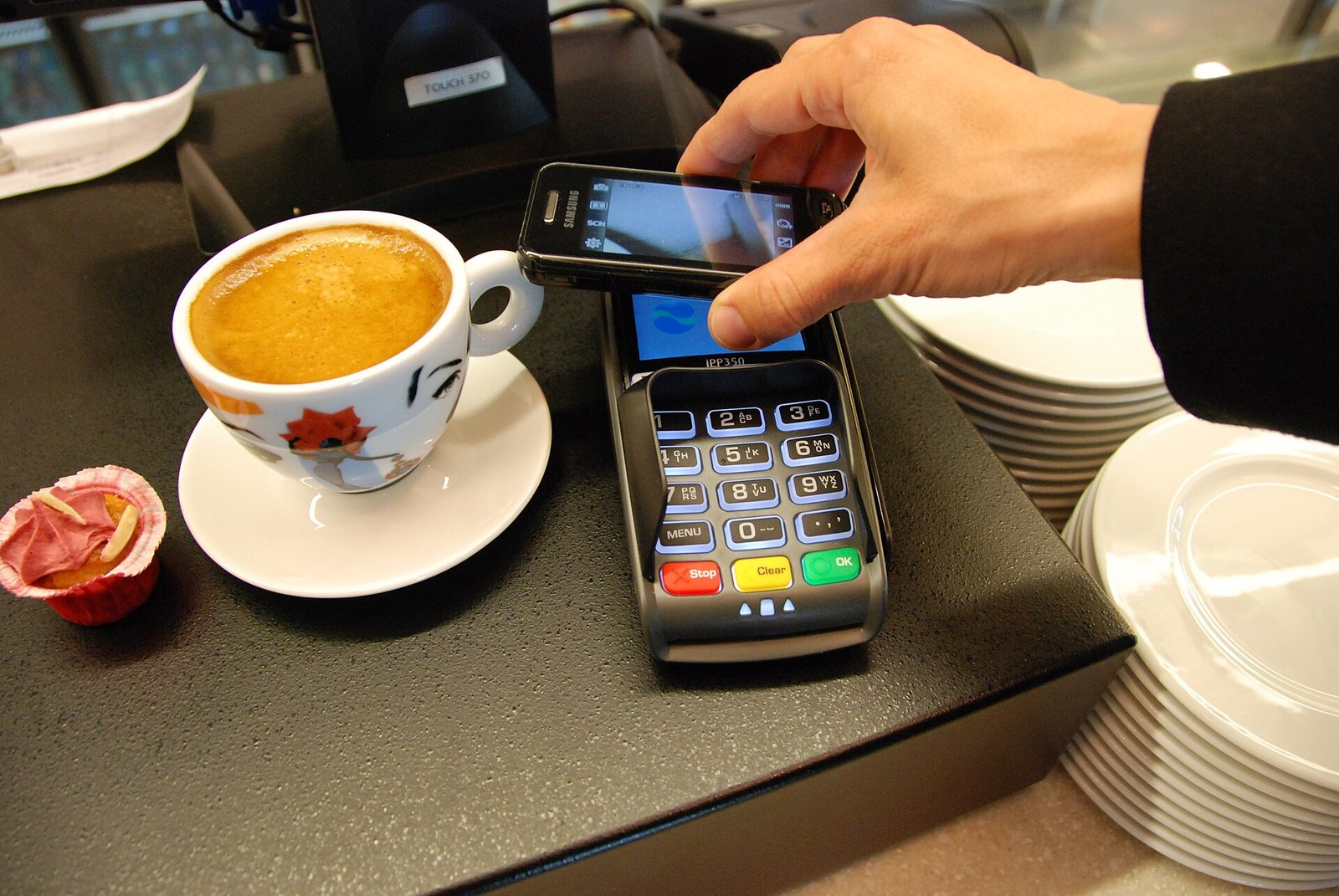
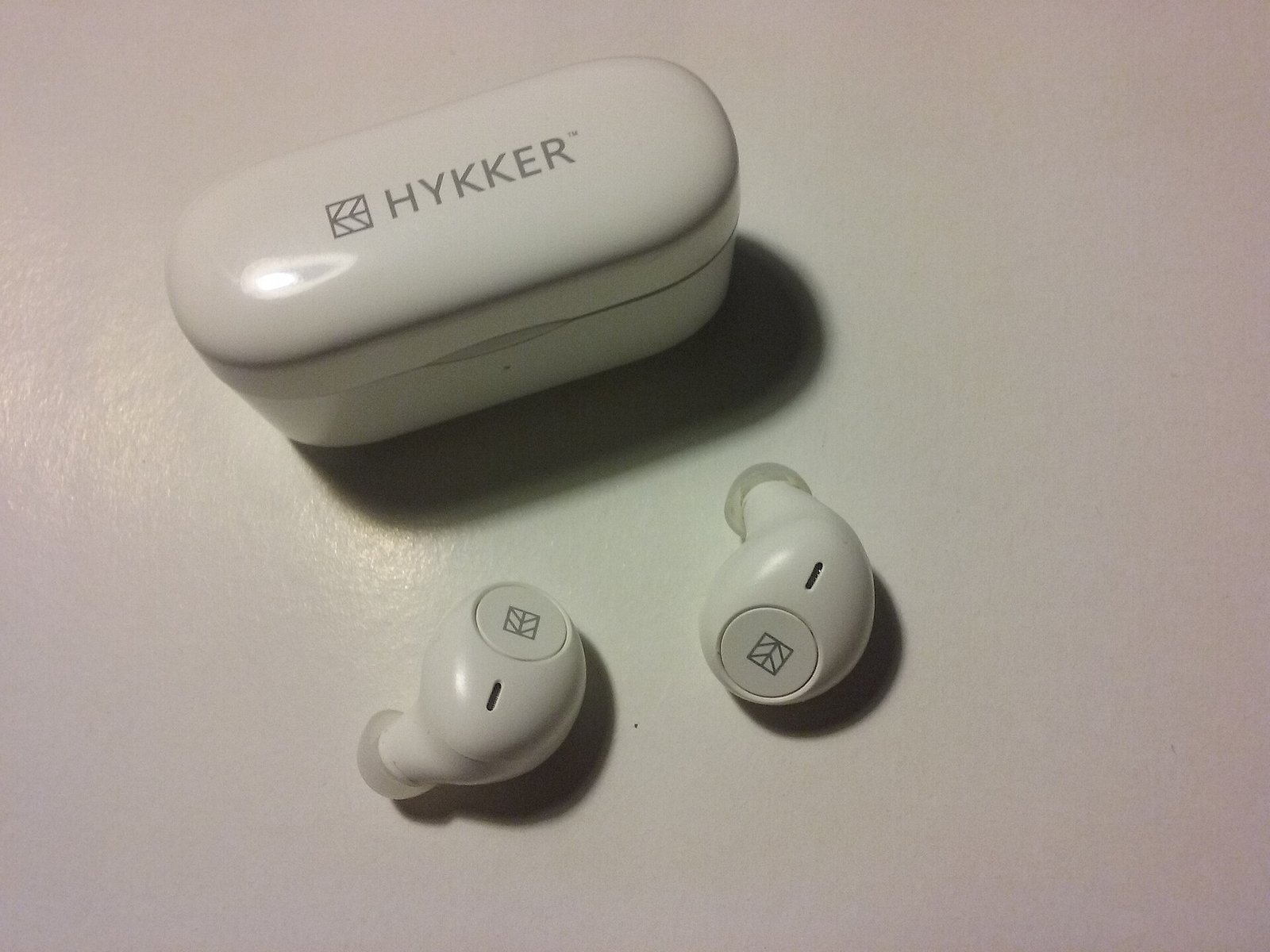
If you have ever tapped a debit card on a POS machine at a supermarket in Lekki, waved your phone at a turnstile, or held two phones together to pair a set of earbuds, you have used NFC. It is one of those technologies that has quietly become part of ordinary life without most people ever learning what it is or why it behaves the way it does.
NFC stands for Near Field Communication, and the word that matters most in that phrase is “near”. Unlike Bluetooth, which reaches across a room, or Wi-Fi, which reaches across a building, NFC works only when two things are almost touching. That sounds like a weakness. It is actually the entire point, and once you understand why, a lot of confusing behaviour starts to make sense: why your card sometimes needs to be moved slightly, why a phone case can block a payment, why a stolen contactless card has a spending limit, and why tapping is generally safer than handing your card to a stranger.
This guide explains what NFC is, the physics behind it in plain language, how tap-to-pay actually works from the moment you authorise to the moment the transaction clears, where NFC shows up in Nigeria beyond payments, and the practical troubleshooting that solves most tap failures. No engineering background needed.
What NFC actually is
NFC is a short-range wireless standard. Two devices exchange small amounts of data when they come within roughly four centimetres of each other, operating on a radio frequency of 13.56 MHz.
It grew out of RFID, the technology behind warehouse inventory tags and the access cards used in office buildings. The key difference is direction. Classic RFID is one-way: a tag announces itself, a reader listens. NFC is two-way. Both devices can send and receive, which is what allows a phone and a payment terminal to hold an actual conversation rather than one simply shouting at the other.
The data rate is modest, up to about 424 kilobits per second. That is nothing compared with Wi-Fi, and deliberately so. NFC was never meant to move files. It was designed to move a few hundred bytes reliably and instantly: a payment token, a card identifier, a web address, a pairing instruction.
The physics, without the equations
Here is the part that explains almost everything else.
NFC does not transmit a radio signal across a distance the way a Wi-Fi router does. It works by electromagnetic induction, the same principle behind wireless phone charging and behind the transformer in a laptop charger.
The reader — the POS terminal, the turnstile, your phone — generates a small magnetic field. When a compatible chip enters that field, the field induces a tiny electrical current in the chip’s antenna coil. That current powers the chip. The chip then modulates the field in a pattern the reader can detect, which is how it “replies”.
Two consequences follow, and both matter in daily use.
First, most NFC tags need no battery. A contactless bank card has no power source. Neither does a hotel key card or an NFC sticker. They are inert until they enter a reader’s field, borrow energy from it, do their job, and go quiet again. This is why a card that has been in your wallet for three years still taps perfectly.
Second, the range is tiny and cannot be extended. The strength of an induction field falls away extremely quickly with distance — far faster than a normal radio signal. Past about four centimetres there is simply not enough energy reaching the chip to wake it up. You cannot boost this with a better antenna or a stronger battery, because the limitation is the physics of induction itself.
That short range is a security property. Somebody standing behind you in a queue cannot read your card from a metre away, because at a metre there is no usable field. To capture an NFC transaction, an attacker would essentially have to be touching your pocket.
How tap-to-pay actually works
When you tap a phone on a POS terminal, more happens in that half-second than most people realise. The sequence runs roughly like this.
You authorise. Face recognition, fingerprint, or a device PIN. Nothing transmits until this succeeds. This is the single biggest security difference between a phone and a plain contactless card.
The phone generates a token. Your actual card number is not sent. Instead the phone produces a one-time cryptographic token — a substitute number valid for this transaction only.
The terminal reads the token over the 13.56 MHz link.
The token travels to the payment network through the merchant’s acquiring bank, gets validated against your real account, and the transaction is approved or declined.
The token is discarded. It cannot be reused. Even if somebody captured it in transit, it would be worthless a second later.
This is called tokenisation, and it is why a phone tap is generally more secure than handing your physical card to an attendant who walks away with it. Your card number never enters the terminal, is never stored by the merchant, and cannot leak from the merchant’s systems in a later breach.
Contactless cards: the same idea, fewer safeguards
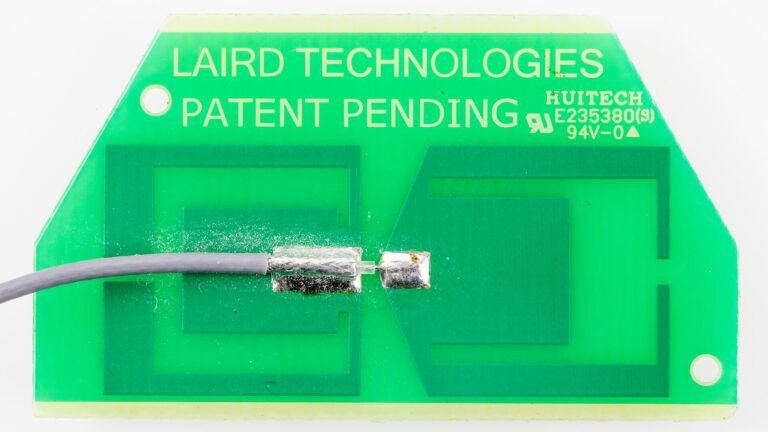
A contactless bank card — the ones with the four curved lines printed on them — contains a passive NFC chip and a thin antenna coil laminated inside the plastic.
It works the same way, with one important difference: there is no authentication step. The card cannot check that the person holding it is you. The tap alone completes the transaction.
That is precisely why banks impose a per-transaction contactless limit and require PIN entry above it, and often after a certain number of consecutive taps. The limit exists to cap the damage if a card is lost or stolen. If your card goes missing, report it immediately rather than assuming the low limit protects you indefinitely — the limit caps each transaction, not the total number of them.
Where Nigerians meet NFC
POS terminals. Nigeria runs on POS. There are millions of terminals in circulation, from supermarket checkouts to the agent under an umbrella at a junction. Many now accept contactless taps in addition to the familiar chip-and-PIN insert. Whether tap works depends on the individual terminal and how the merchant’s bank has configured it, which is why the same card taps at one shop and needs inserting at another.
Verve, Mastercard and Visa contactless. Nigeria’s domestic card scheme, Verve, alongside the international schemes, has rolled out contactless cards. If your card has the curved-lines symbol, it has an NFC chip in it.
Phone wallets. Availability of Apple Pay and Google Pay with Nigerian-issued cards has historically been limited and has shifted over time, and support depends on your bank and card scheme. Check with your own bank rather than assuming — this is one area where the situation changes and general articles go out of date quickly.
Transit and access control. Lagos BRT ticketing, estate and office access cards, and hotel room keys commonly use NFC or closely related card technology.
NFC tags. Small programmable stickers, widely sold online, that trigger an action when tapped: opening a link, sharing contact details, toggling a phone setting. They cost very little and are genuinely useful for small business — a tag on a shop counter that opens your WhatsApp catalogue, for instance.
Device pairing. Some speakers and headphones pair by tapping rather than making you dig through Bluetooth menus.
Which phones have NFC
NFC is standard on flagship phones and most mid-range models, but it is one of the first components dropped to hit a low price. That matters a great deal in Nigeria, where budget Android phones from Tecno, Infinix and itel make up a very large share of the market and where NFC is frequently absent on entry-level models.
If tap-to-pay or NFC tags matter to you, check the specification sheet before buying rather than assuming. Look for “NFC” explicitly listed under connectivity. A phone can have 5G, a big battery and a good camera and still have no NFC at all.
On iPhone, NFC hardware has been present since the iPhone 6, though the ability to read general NFC tags arrived later with iOS 11 and the iPhone 7. Most current Android phones above the entry tier support both reading and writing tags.
Why your tap sometimes fails, and how to fix it
Almost every NFC failure comes down to one of five things.
The antenna is in the wrong place. The NFC coil sits at a specific spot on the back of the phone — usually the upper middle, but it varies by model. If tapping does not register, move the phone slowly across the terminal rather than holding it in one place.
The case is too thick or has metal in it. Induction fields do not pass through metal. A metal ring holder, a metal card slot, or a very thick rugged case sitting exactly over the antenna will block the field. Remove the case and try again to test this.
Two cards are fighting. If you keep a contactless bank card and a transit or access card in the same wallet as your phone, the reader may detect both and refuse to guess. Separate them.
The phone is off, dead, or NFC is disabled. On Android, NFC is a toggle in settings and can be switched off. On most phones NFC needs the device powered on, though some newer models retain a reserve for payments briefly after the battery dies.
The terminal does not actually support it. Common in Nigeria. Not every deployed POS has contactless enabled even when the hardware supports it. If your card taps everywhere else, the terminal is the problem, not you.
Is NFC safe?
Reasonably, yes — more so than the alternatives it replaces.
The short range makes remote interception impractical. Tokenisation means your real card number is not transmitted. Phone payments add biometric authentication that a physical card cannot offer. And the transaction limits on contactless cards cap the exposure if one is stolen.
The realistic risks are mundane rather than exotic. A lost contactless card can be tapped by whoever finds it, up to the limit, until you report it. An NFC tag in a public place could be programmed to open a malicious website, so treat an unexpected prompt to open a link after tapping something the same way you would treat an unexpected link in a text message.
What is not a realistic risk, despite persistent rumours, is somebody walking past you in a market and silently draining your account with a hidden reader. The physics do not allow it at any useful distance, and the transaction would still need to clear a payment network that flags exactly that pattern.
The short version
NFC is a deliberately short-range, deliberately low-bandwidth technology that works by inducing a current in a nearby chip rather than broadcasting across a distance. That design choice explains its four-centimetre range, its battery-free tags, its resistance to remote snooping, and most of the reasons a tap occasionally fails.
For everyday use in Nigeria, three practical points are worth remembering. Check for NFC on the spec sheet before buying a budget phone, because it is frequently missing. If a tap does not register, move the phone around slowly and take the case off before blaming the card. And treat a contactless card the way you would treat cash in your pocket: the per-transaction limit reduces the damage of losing it, but reporting it quickly is what actually protects you.
Understand those, and the technology stops being magic and becomes just another tool that works predictably once you know its rules.
Sources and verification
We checked the practical guidance on this page against the primary or authoritative references below. Follow the linked source for the latest official position before making a payment or time-sensitive decision.
The cloud is not a metaphor for thin air. It is somebody else’s computers in a building somewhere. Here is what that actually means for your files, your money and your data costs.
Refresh rate is how many times a second your screen redraws. Here is what 60Hz, 120Hz and 144Hz actually feel like, where the benefit is real, and where it just costs battery.
A GPU draws what you see and increasingly runs AI. Here is how it differs from a CPU, what VRAM and the model numbers mean, and how much graphics power you actually need.
Wi-Fi 6, 6E and Wi-Fi 7 are marketing names for real technical changes. Here is what each one actually improves, and whether upgrading your router in Nigeria is worth the money.
All USB-C ports look identical and behave completely differently. Here is why cables are not interchangeable, what Thunderbolt adds, and how to avoid buying the wrong one.
DDR5 is faster than DDR4 on paper, but the practical difference is smaller than the marketing suggests. Here is what changed, when it matters, and how much RAM you actually need.