Router boxes are covered in numbers designed to look impressive. Wi-Fi 6. Wi-Fi 6E. Wi-Fi 7. AX3000. BE9300. Tri-band. The implication is always the same: newer number, faster internet.
The awkward truth is that a new router does not make your internet connection faster. Your connection speed is whatever your provider sells you. What a better router changes is how well that connection is distributed inside your home — how many devices can use it at once without interfering, how far the signal reaches, and how stable it stays when several people are online.
That distinction matters enormously in Nigeria, where a common household situation is a modest fixed line or a mobile router shared by many devices across a building with thick walls. The bottleneck is often the Wi-Fi, not the line. Sometimes it is the line, and then no router helps at all. Knowing which is which saves real money.
This guide explains what each Wi-Fi generation actually changed, in plain terms, and how to decide whether an upgrade is worth it for you.
The naming, decoded
For years Wi-Fi versions had names like 802.11n and 802.11ac, which meant nothing to anyone outside networking. In 2018 the industry adopted plain numbers and retroactively renamed the older standards.
Marketing name
Technical name
Roughly when
Wi-Fi 4
802.11n
2009
Wi-Fi 5
802.11ac
2014
Wi-Fi 6
802.11ax
2019
Wi-Fi 6E
802.11ax on 6 GHz
2021
Wi-Fi 7
802.11be
2024
If you see 802.11ac on a box, that is Wi-Fi 5.
Bands: the part that actually matters most
Before the generations, understand the bands. Wi-Fi operates on different frequency ranges, and this affects daily life more than the version number does.
2.4 GHz. Travels furthest and passes through walls best. Also slow, and extremely congested — it is shared with Bluetooth, microwaves, cordless phones and every neighbour’s router. Good for reach, poor for speed.
5 GHz. Considerably faster, much less crowded, but shorter range and weaker through concrete walls. Best for devices reasonably near the router.
6 GHz. Introduced with Wi-Fi 6E. Very wide, very fast, almost empty because only recent devices can use it. Shortest range of the three and stopped fairly effectively by walls.
A practical implication most people never act on: if your phone is in the same room as the router, put it on 5 GHz. If it is two concrete walls away, 2.4 GHz will probably serve you better despite the lower headline speed. Many routers publish both as separate network names precisely so you can choose.
What Wi-Fi 6 actually improved
Wi-Fi 6 is frequently described as faster. Its more important achievement was handling many devices at once.
Older Wi-Fi essentially served devices one after another, very quickly. As device counts grew — phones, laptops, TVs, cameras, smart plugs — that approach began to strain.
Wi-Fi 6 introduced techniques that let the router talk to several devices simultaneously and schedule their transmissions more intelligently, rather than letting them compete. It also added a feature that lets battery devices agree a schedule with the router and sleep between transmissions, which meaningfully helps phone and smart-device battery life.
The result is that a Wi-Fi 6 network degrades far more gracefully under load. With three devices you may notice nothing. With twenty, the difference is real.
What Wi-Fi 6E added
Wi-Fi 6E is Wi-Fi 6 with access to the new 6 GHz band.
There is no new technique here. The gain is space. The 6 GHz band is wide and, for now, nearly unused, which means very little interference from neighbours. In a crowded apartment block where a scan shows twenty competing networks, that emptiness is worth more than any efficiency feature.
The trade-off is range. Higher frequencies attenuate faster and are absorbed more by walls. In a typical Nigerian building with concrete block walls, 6 GHz often will not reach the next room usefully. It is excellent in the room with the router and frequently irrelevant beyond it.
Both the router and the device must support 6E. A Wi-Fi 6E router does nothing extra for a phone that lacks the radio.
What Wi-Fi 7 adds
Wi-Fi 7 pushes further: wider channels, a more efficient encoding scheme, and — the genuinely interesting feature — the ability for a device to use more than one band at the same time rather than picking one.
That last capability improves reliability as much as speed. If one band suffers interference, traffic continues on another without the stall you would otherwise feel. For latency-sensitive use it is a meaningful improvement rather than a bigger number.
The catch is familiar: both ends must support it, Wi-Fi 7 devices remain relatively expensive, and none of it increases the speed of the line coming into your building.
Does any of this help in Nigeria?
Honest assessment, because the marketing will not give you one.
If your internet plan is modest, a new router will not increase your download speed. If the line delivers 20 Mbps, Wi-Fi 5 already carries that comfortably. Upgrading the router to make the internet faster is buying the wrong thing.
If you have many devices, Wi-Fi 6 genuinely helps. A household with a dozen or more connected things benefits from better scheduling regardless of line speed.
If you live somewhere crowded, 6E’s empty band is the single biggest practical gain available, provided you are near the router.
If your problem is coverage, no generation fixes distance. Concrete defeats all of them. The answer is a mesh system or an access point on a cable, not a newer standard.
If you use mobile data via a router, the constraint is the mobile network, and Wi-Fi generation is close to irrelevant.
If power is unreliable, a small UPS keeping the router alive through short interruptions improves your daily experience more than any specification on the box.
How to decide
Ask three questions in order.
One: is the line or the Wi-Fi the problem? Run a speed test with a device beside the router, then run the same test where you normally sit. If the first is good and the second is poor, you have a Wi-Fi problem worth solving. If both are poor, the line is the constraint and a router changes nothing.
Two: what do your devices support? Buying Wi-Fi 7 for a house of Wi-Fi 5 phones spends money on capability nothing can use.
Three: is it coverage or capacity? Coverage problems need better placement, a mesh set or a wired access point. Capacity problems — many devices, all struggling at once — are what newer generations actually address.
Cheap changes that beat a new router
Before spending anything, try these. They resolve a surprising share of complaints.
Move the router. Central, elevated, out in the open. Not in a cupboard, not behind a television, not on the floor in a corner. This is free and often transformative.
Separate the bands. Give 2.4 GHz and 5 GHz different names so you can deliberately choose per device.
Change the channel. If neighbouring networks crowd your channel, switching reduces interference. Many routers can do this automatically.
Restart it occasionally. Genuinely fixes accumulated problems.
Use a cable where it matters. A TV, a console or a work computer on Ethernet takes load off the Wi-Fi entirely and gets a better connection itself.
Update the firmware. Security fixes and stability improvements.
Add a UPS. Not a Wi-Fi feature, but in practice one of the most useful upgrades available here.
The short version
Wi-Fi 6 improved how routers handle crowds of devices. Wi-Fi 6E added a wide, empty band that is excellent nearby and poor through walls. Wi-Fi 7 lets devices use multiple bands simultaneously, improving reliability as much as speed.
None of them increase the speed of your internet line, which is the thing most people are actually hoping to fix.
Diagnose first: test beside the router and where you sit. If the line is the limit, upgrade the plan. If coverage is the limit, improve placement or add mesh. If you genuinely have many devices competing, then a newer generation earns its price — and even then, moving the router to a better spot might have done most of the job for free.
Sources and verification
We checked the practical guidance on this page against the primary or authoritative references below. Follow the linked source for the latest official position before making a payment or time-sensitive decision.
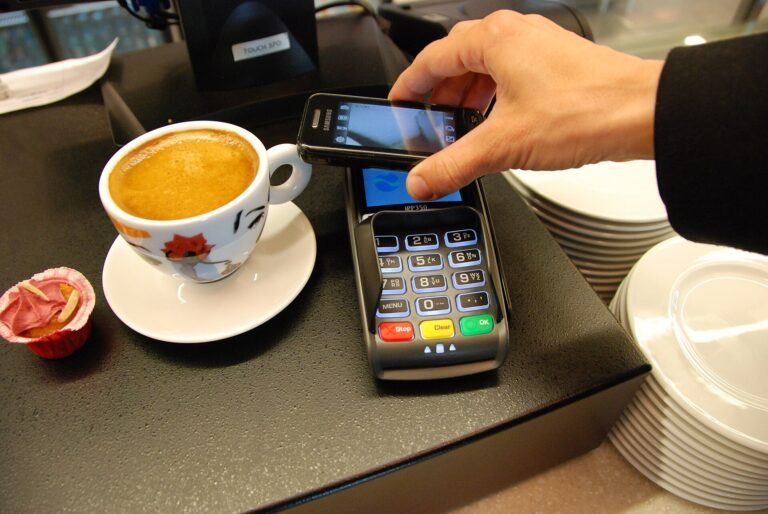
NFC is what makes tap-to-pay, contactless cards and instant device pairing work. Here is how it actually functions, why it only works at a few centimetres, and where Nigerians meet it every day.
Bluetooth is in every phone, earbud and speaker, and it drops at the worst moments. Here is how it actually works, what the version numbers mean, and how to fix the common failures.
Refresh rate is how many times a second your screen redraws. Here is what 60Hz, 120Hz and 144Hz actually feel like, where the benefit is real, and where it just costs battery.
All USB-C ports look identical and behave completely differently. Here is why cables are not interchangeable, what Thunderbolt adds, and how to avoid buying the wrong one.
Latency is the delay between doing something and seeing the result. It matters more than download speed for calls, gaming and video. Here is what causes it and how to reduce it in Nigeria.
Encryption is what stops other people reading your messages, your banking app and your files. Here is how it works in plain language, what it protects, and the limits worth knowing.